Governing Soil Together: The Role of Communities and Cooperatives in Fragile Rural Areas
The Fragile Areas 2026 Conference, titled Voids and Appetites: The Future of Soil in Fragile Rural Areas, highlighted the importance of creating spaces where researchers and practitioners can engage in shared reflection on the future of rural territories.
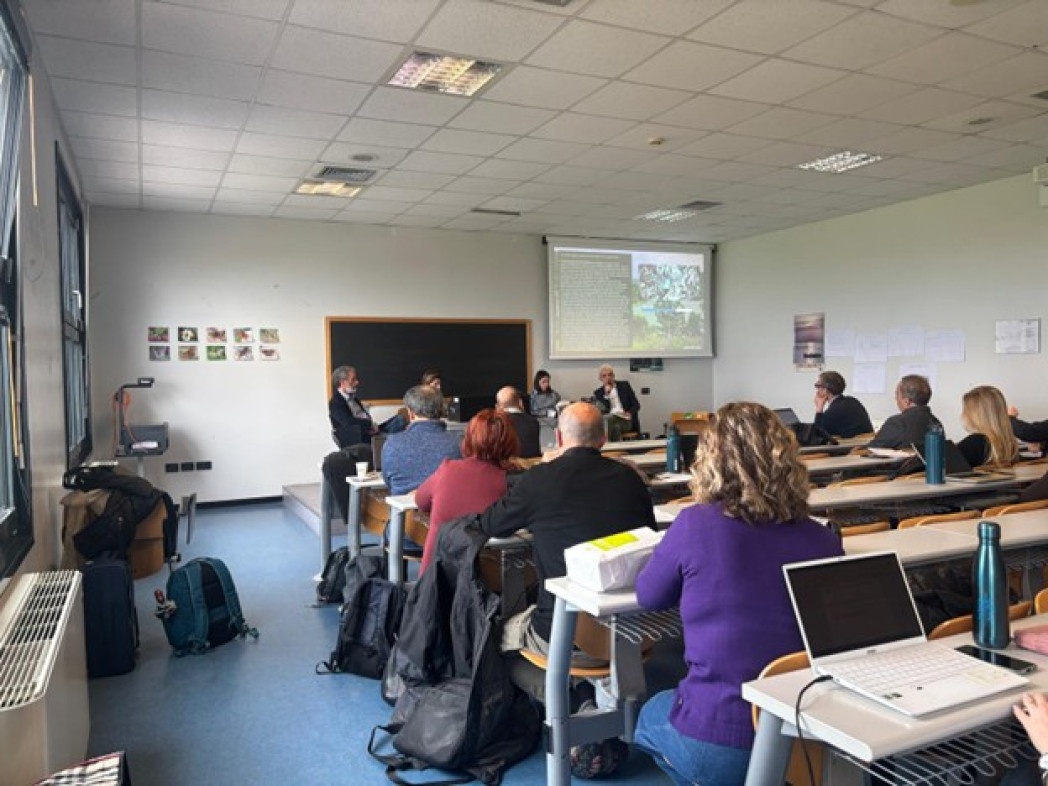
Session 3, dedicated to social economy and community cooperatives, offered particularly valuable insights for those working on soil governance as a common good. Sabina Polidori (INAPP) emphasized that, in fragile rural areas, soil is shaped by tensions, conflicts, and situated practices of regeneration. Rather than focusing on “best practices” to be replicated, it is crucial to recognize the value of positive, context-specific experiences. As competition over land use intensifies, new forms of shared governance and civic monitoring become increasingly important. Fragility, in this sense, is not merely a condition but a relational framework: governing soil ultimately means governing relationships.
The contribution by Ricardo Stocco, Andrea Zanzini, Ramona Casi, Michele Casali, and Marta Monti illustrated how, in the Romagna Apennines, the fragility of soil reflects the fragility of local communities. Re-inhabiting these territories is essential for enhancing landscape resilience. In this context, community cooperatives are emerging as powerful tools for collectively managing land, reducing individual risk, and creating organizational conditions that enable people to remain in place. Their work demonstrates that collective governance is not about resisting change, but about imagining new ways of inhabiting and caring for territories.
Eustachio Santochirico (Oltrelab) highlighted the role of cultural animation in reconnecting communities with their territories, drawing on the experience of the Craco Park in Basilicata.
Finally, Debora Visentin presented a community-based approach to Payments for Ecosystem Services that moves beyond the limitations of pure monetization and builds on existing social capital. Her work points toward cooperative and regenerative models for governing soil, water, and local tourism, aligned with situated and value-driven perspectives.
Discussing soil in fragile rural areas ultimately means discussing community, alliances, and shared responsibility. When supported by collective, creative, and context-sensitive forms of governance, fragility can become a generative force.